How Urine Is Made: The Amazing Kidney Process That Filters Your Blood
The Human Body’s Incredible Water and Filtration System
Many people think that after drinking water, it simply travels from the stomach to the kidneys and turns into urine. However, the actual process inside the human body is much more complex and fascinating.
The water we drink does not directly enter the kidneys. Instead, it is absorbed into the bloodstream, where it becomes part of the blood plasma. The kidneys then filter this blood, remove unnecessary substances, regulate water levels, and produce urine.
This continuous process helps maintain the body’s internal balance and keeps us healthy.
What Happens to Water After We Drink It?
When we drink water, it first passes through the esophagus and reaches the stomach. From there, it moves into the small intestine, where most absorption occurs.
The walls of the small intestine contain millions of tiny blood vessels. These vessels absorb water and dissolved nutrients, allowing them to enter the bloodstream.
At this stage, the water is no longer simply inside the digestive system. It becomes part of the liquid portion of blood called plasma.
The bloodstream then carries this water throughout the body.
How Does Water Reach the Kidneys?
The heart acts as a powerful pump that continuously circulates blood through the entire body.
As blood travels through the circulatory system, it reaches the kidneys, where a highly organized filtration process begins.
The kidneys are two bean-shaped organs located in the lower back area. Although they are small, they perform extremely important functions every second of the day.
Their main role is not only to produce urine but also to maintain the body’s fluid, mineral, and chemical balance.
How Do Kidneys Filter Blood?
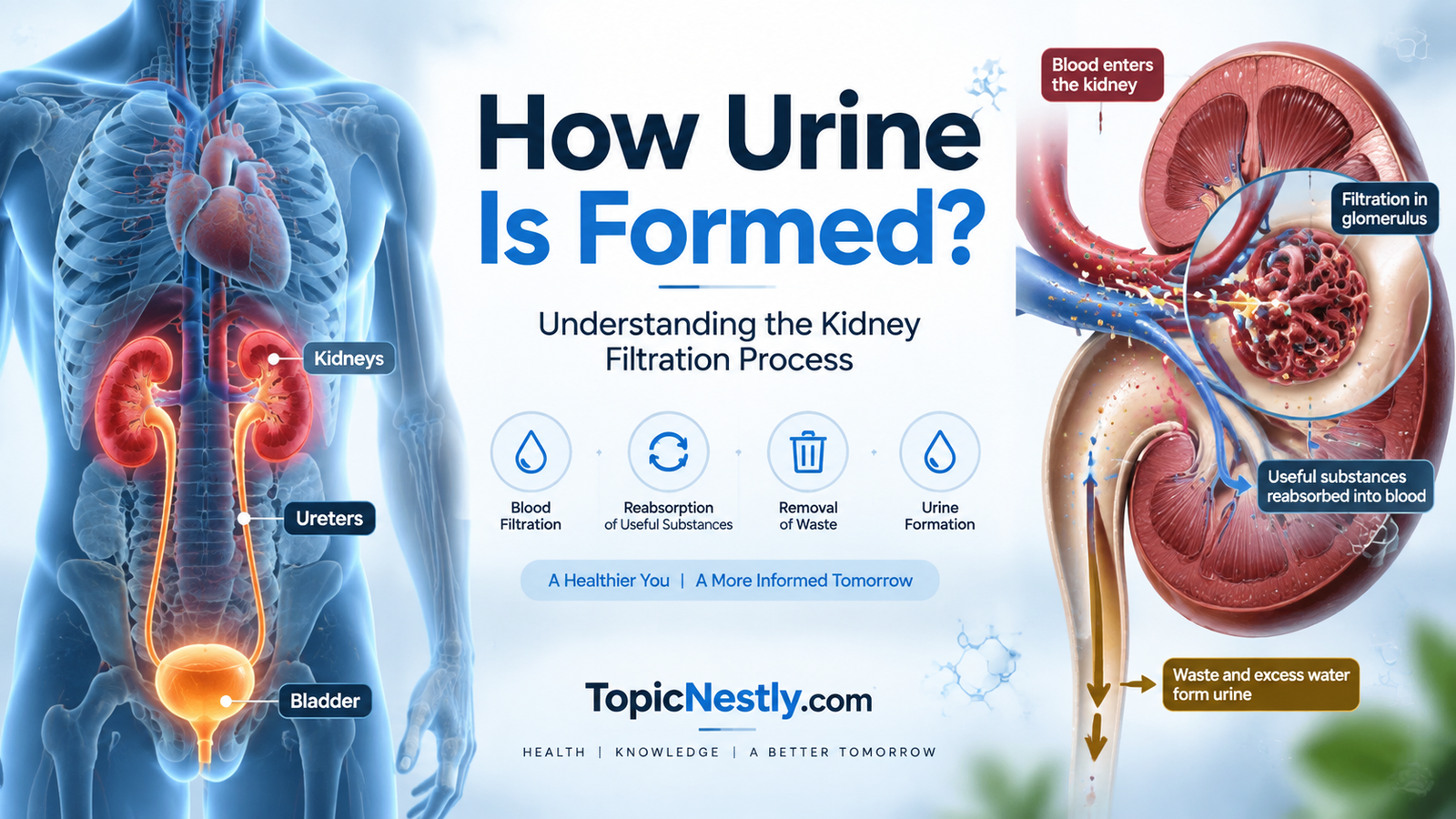
Inside each kidney are approximately one million tiny filtration units called nephrons.
Each nephron contains a structure called the glomerulus, which works like a microscopic filter.
When blood reaches the glomerulus, pressure allows small molecules to pass through, including:
- Water
- Minerals and salts
- Glucose
- Urea
- Other small waste substances
However, important components such as blood cells and large proteins normally remain in the bloodstream.
This first step is called filtration.
The Body Does Not Waste Useful Water
After filtration, a large amount of water and useful substances enter the kidney tubules.
The body does not simply remove all of this fluid. Instead, the kidneys carefully decide what should be saved and what should leave the body.
Through a process called reabsorption, the kidneys return most of the needed water, glucose, and essential minerals back into the bloodstream.
This intelligent system allows the body to maintain the right amount of fluid.
How Does the Body Control Urine Concentration?
The kidneys constantly adjust urine production according to the body’s needs.
When the body has less water:
- The kidneys conserve more water.
- Less urine is produced.
- Urine becomes more concentrated.
When the body has excess water:
- The kidneys remove the extra water.
- More urine is produced.
- Urine becomes more diluted.
This balance prevents dehydration and helps maintain normal body functions.
What Is Urine Made Of?
Urine is the final product created after the kidneys complete filtration and reabsorption.
It mainly contains:
- Excess water
- Urea (a waste product from protein metabolism)
- Creatinine
- Extra salts
- Other substances the body does not need
The urine then travels from the kidneys through two small tubes called ureters and collects in the urinary bladder.
When the bladder becomes full, urine leaves the body through the urethra.
Is Urine Really Made From Blood?
In a scientific sense, urine is produced through the filtration of blood plasma.
The kidneys do not turn blood directly into urine. Instead, they filter the liquid part of blood, remove waste materials and extra substances, and adjust water levels before producing urine.
The complete journey is:
Water intake → Small intestine → Bloodstream → Heart circulation → Kidneys → Filtration → Reabsorption → Urine formation → Bladder → Removal from the body
Why Healthy Kidneys Are Important
Healthy kidneys are essential for survival because they help:
- Remove waste products from the blood
- Control water balance
- Maintain mineral levels
- Support normal blood pressure regulation
- Keep the body’s chemical environment stable
Without properly functioning kidneys, harmful waste products and excess fluids can build up inside the body.
Signs That Your Kidneys May Need Attention
Some common warning signs of kidney problems may include:
- Changes in urination patterns
- Swelling in feet or ankles
- Persistent fatigue
- Blood in urine
- Unusual changes in urine color or appearance
- High blood pressure
If such symptoms appear, medical evaluation is important.
The Amazing Intelligence of the Human Body
A simple glass of water goes through an extraordinary journey inside the human body.
It is absorbed, becomes part of the bloodstream, travels through the circulatory system, reaches the kidneys, and is carefully managed according to the body’s needs.
The kidneys are not just organs that create urine. They are advanced biological systems that protect the body’s balance every moment.
The process of urine formation shows the remarkable complexity and precision of the human body.
Frequently Asked Questions
How does water turn into urine?
Water is absorbed from the small intestine into the bloodstream. The kidneys filter the blood plasma and remove excess water and waste products, which eventually become urine.
Do kidneys filter blood?
Yes, kidneys continuously filter blood plasma through millions of tiny structures called nephrons.
How much urine does a healthy person produce daily?
A healthy adult usually produces around 1 to 2 liters of urine per day, depending on water intake, diet, activity, and environmental conditions.
Why does urine become dark yellow?
Dark yellow urine can occur when the body has less water and the kidneys produce more concentrated urine.
Can drinking more water improve kidney function?
Adequate water intake helps maintain normal kidney function, but excessive water consumption is not always beneficial. The right amount depends on individual health conditions.

Written by Topic Nestly
Add an author biography in WordPress → Users → Profile to display a short author introduction here.